
A quiet cemetery behind a small white church in Thalassery holds the bones of the man who shaped Kerala’s plantation economy, the wife of the Englishman who killed Pazhassi Raja, the founder of one of Kerala’s oldest colleges, and dozens of nameless infants who never made it past their second monsoon. Most Malayalis walk past it without a second glance. Here is what I found when I stopped and read the stones.
The church nobody talks about
Thalassery is famous for many things — biriyani, cricket, the Mappila bakery tradition, the old fort, Brennen College. What it isn’t famous for is a small white-washed Anglican church called St. John’s, sitting quietly on a slope just behind the fort.
I went looking for it on a recent trip with the family. The church itself is modest — the kind of thing you’d walk past in five seconds. Built in 1869, Gothic Revival, a single pointed-arch doorway, a small cross on top. Kerala Tourism restored it in 2009.
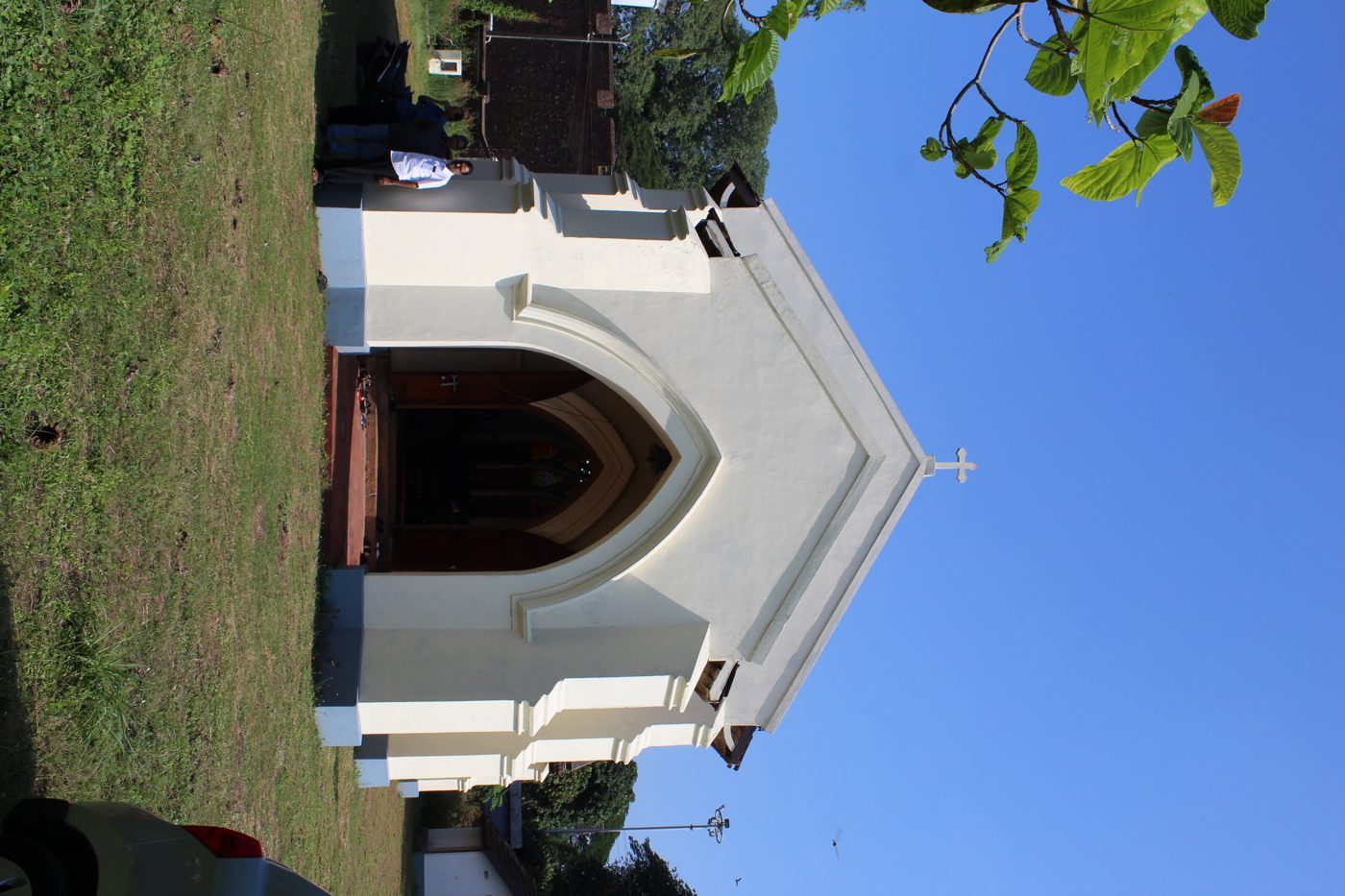
The interesting bit is what’s behind it.
Behind St. John’s is a cemetery — overgrown, half-eaten by termites and creepers, a few dozen tombs scattered across uneven ground. There’s no caretaker. No signboard pointing you in. No entry ticket. You just push through the weeds and start reading the stones.
And what you read, if you bother to read carefully, is one of the most concentrated pieces of colonial Malabar history anywhere in Kerala.
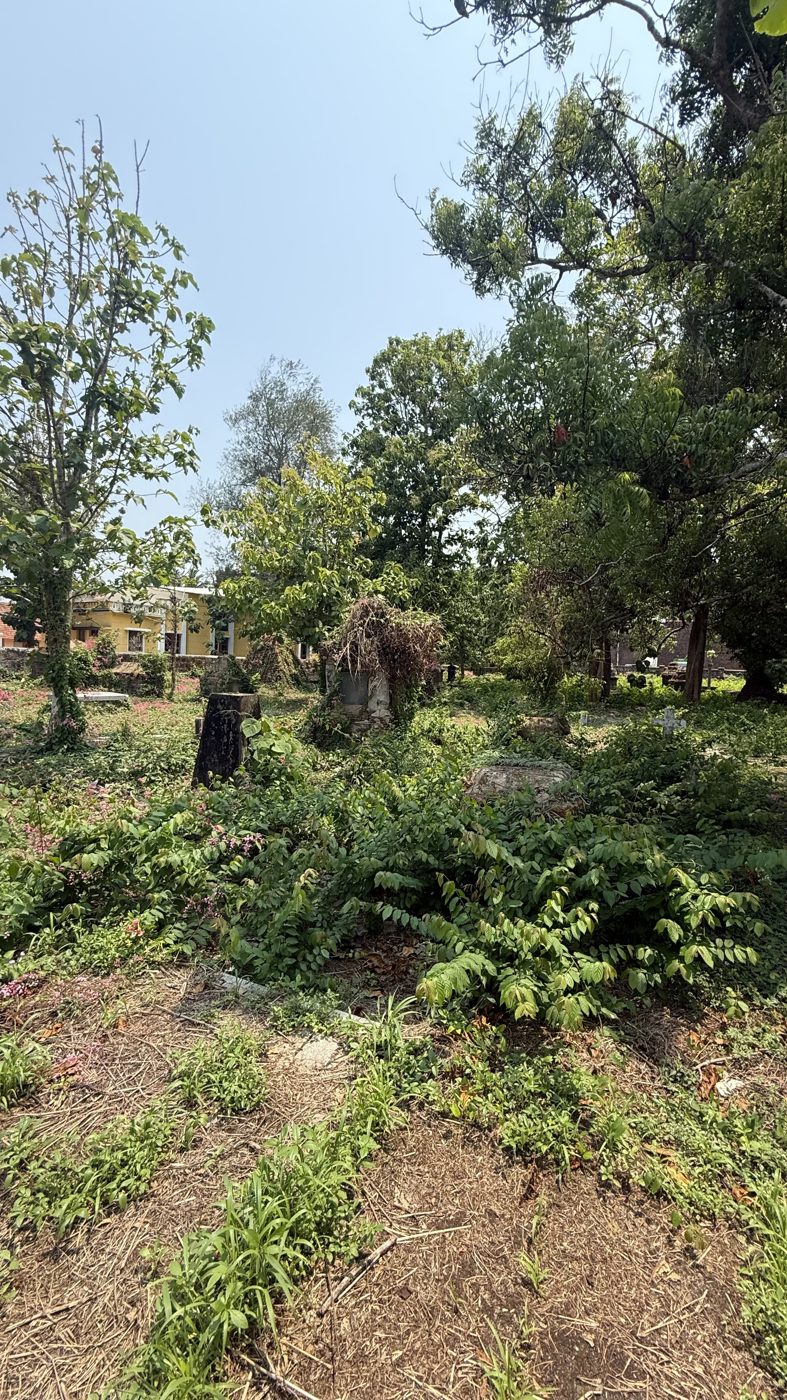
The Kerala Tourism plaque tells you about the building. The graves tell you about the empire.
The official information board at the entrance is fine as far as it goes. It mentions that the church was built in 1869 with money donated by a man called Edward Brennan, that it has Gothic Revival features with Portuguese influences, that it was given a facelift in 2009.
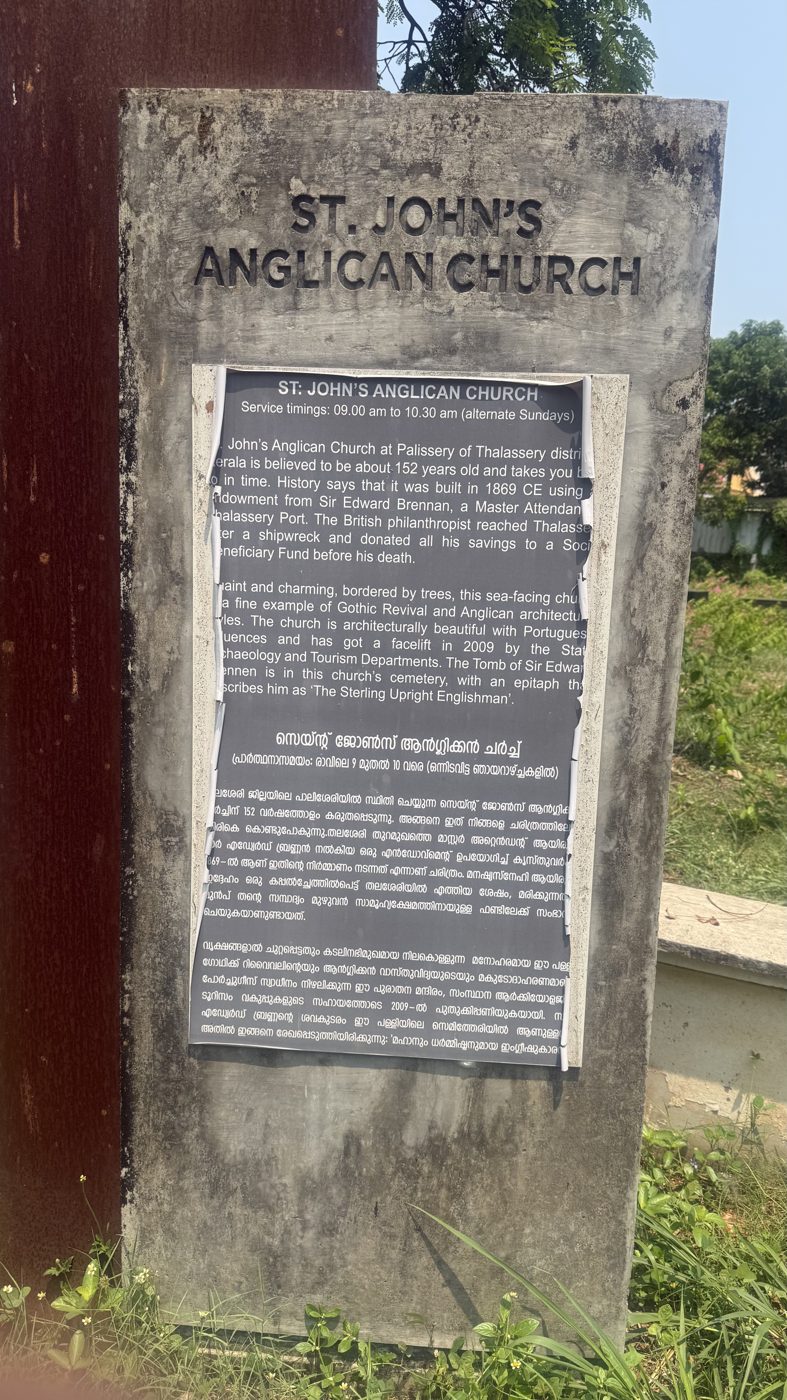
What the board doesn’t tell you is that the cemetery is older than the church. People were being buried here from at least the 1820s — long before St. John’s came up. The church was built for a community that was already dying here for fifty years.
So who were they?
1. The Scotsman who started Kerala’s plantation economy
The most historically loaded grave in the cemetery has the simplest inscription:
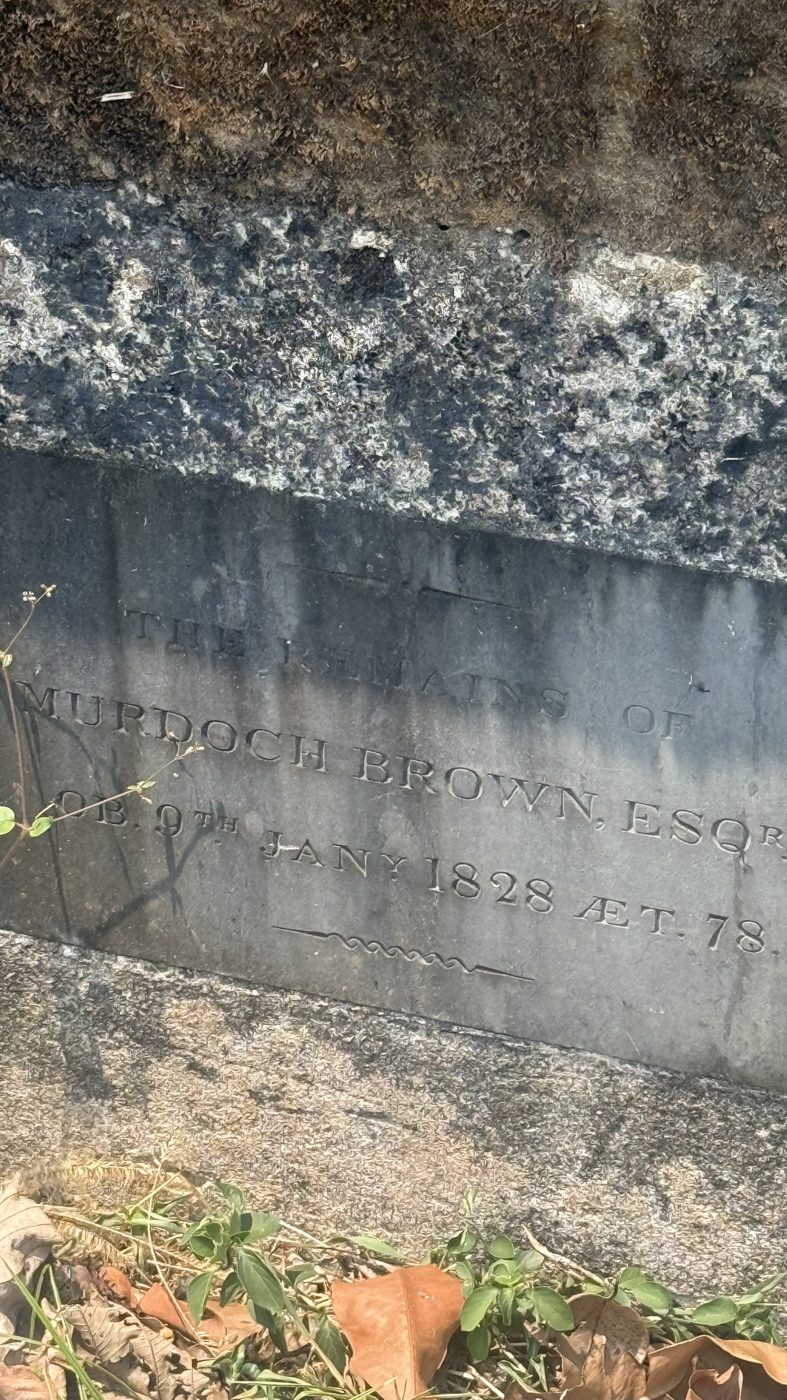
That’s Murdoch Brown. A name that means almost nothing to most Malayalis today, but should.
Brown was a Scotsman who arrived on the Malabar coast in the 1770s, originally working for the Austrian East India Company at Mahe — yes, the Austrians had an India trade for a brief period, and Brown was their man. He was a multilingual operator who served the British, the Dutch, and even briefly Tipu Sultan as an interpreter and intelligence gatherer. The kind of person who survives by being useful to whoever happens to be in power.
After the British took Malabar from Tipu in 1792, Brown saw an opening. In 1797, he set up the Anjarakandy plantation — about 30 km from Thalassery. Pepper, cinnamon, coffee, sugarcane. It was one of the very first commercial plantations established by a European in India. The estate is still there. It’s still called the Anjarakandy Cinnamon Estate. It’s apparently the largest cinnamon estate in Asia.
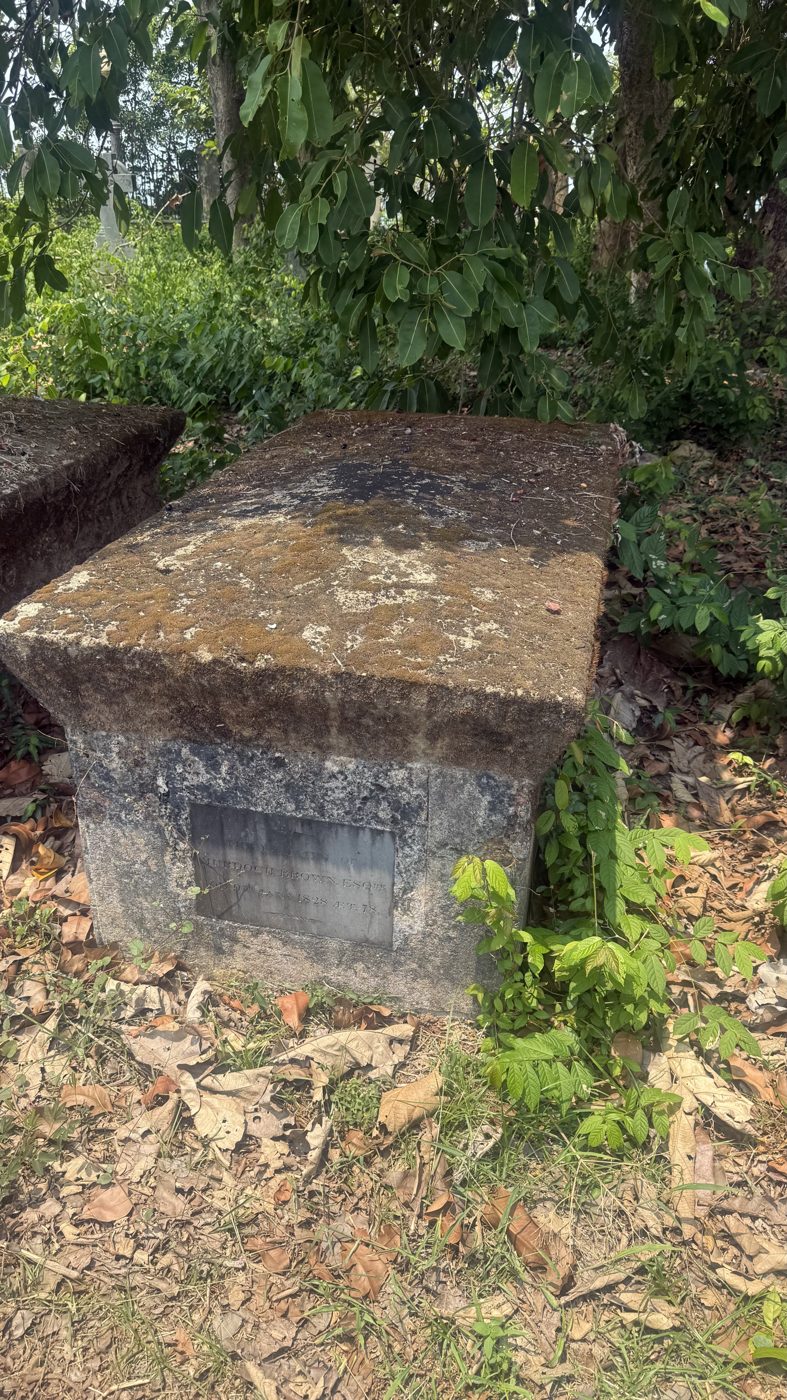
Brown was hugely controversial in his time. The East India Company itself investigated him repeatedly for using forced labour on his plantation — coerced workers from the local population, working in conditions that even the Company, hardly a humanitarian outfit, found troubling.
And right next to him is buried his son or heir, George Brown of Anjarakandy, who died in 1859 at age 66. Two generations of the same plantation family.
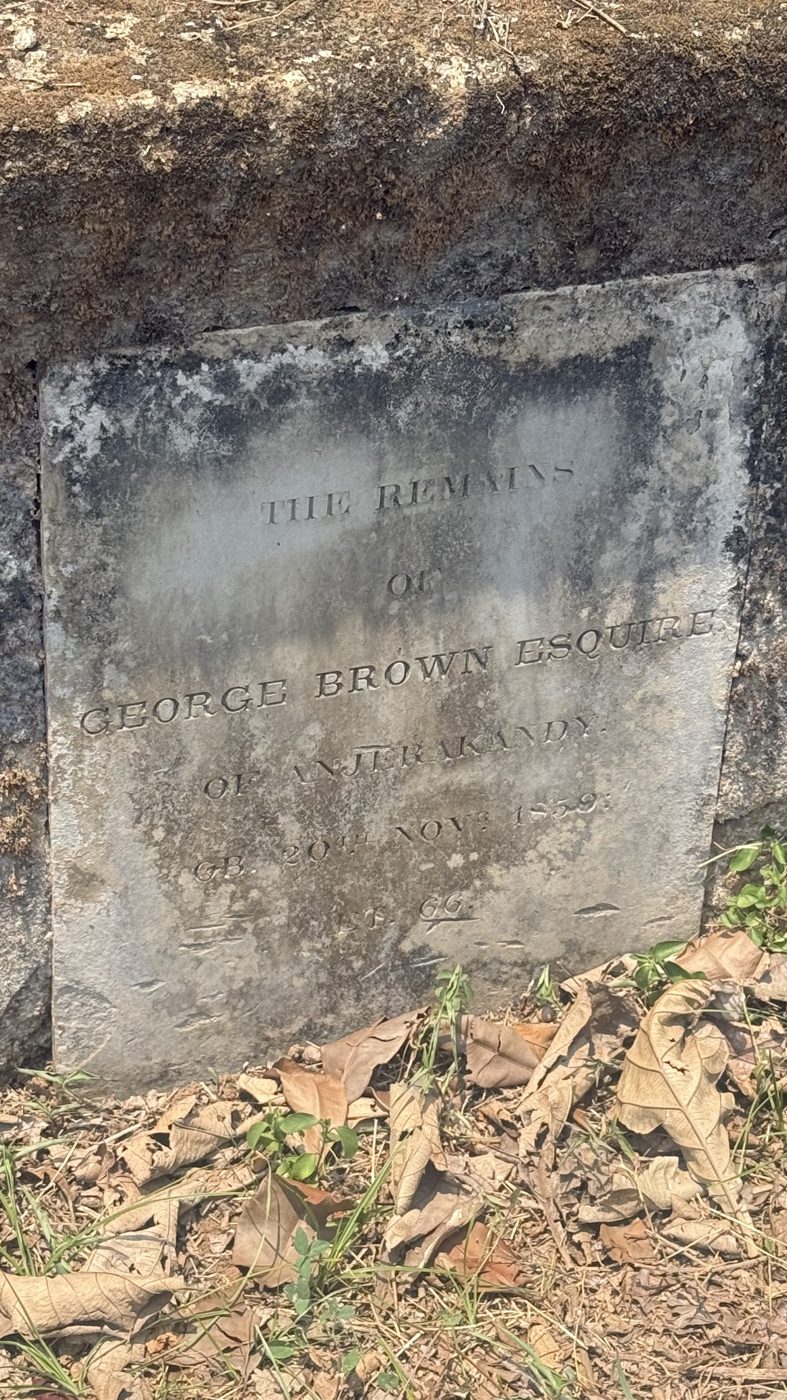
Why does this grave matter? Because Murdoch Brown wasn’t just one British eccentric who happened to grow some pepper. He was the prototype. The model he set up — European management, Indian labour, cash crops for export, plantations carved out of forest land — became the template for everything that followed. Wayanad coffee. High Range tea. Munnar’s hill stations. Idukki cardamom. Coorg’s plantations next door. The entire mountain economy of South India was built on the pattern Murdoch Brown invented at Anjarakandy in 1797.
And he’s lying in a half-forgotten grave covered in moss and dry leaves.
2. The wife of the man who killed Pazhassi Raja
Twenty steps away, there’s a flat slab on the ground. Big, plain, with a long inscription. This is the one that stopped me cold.
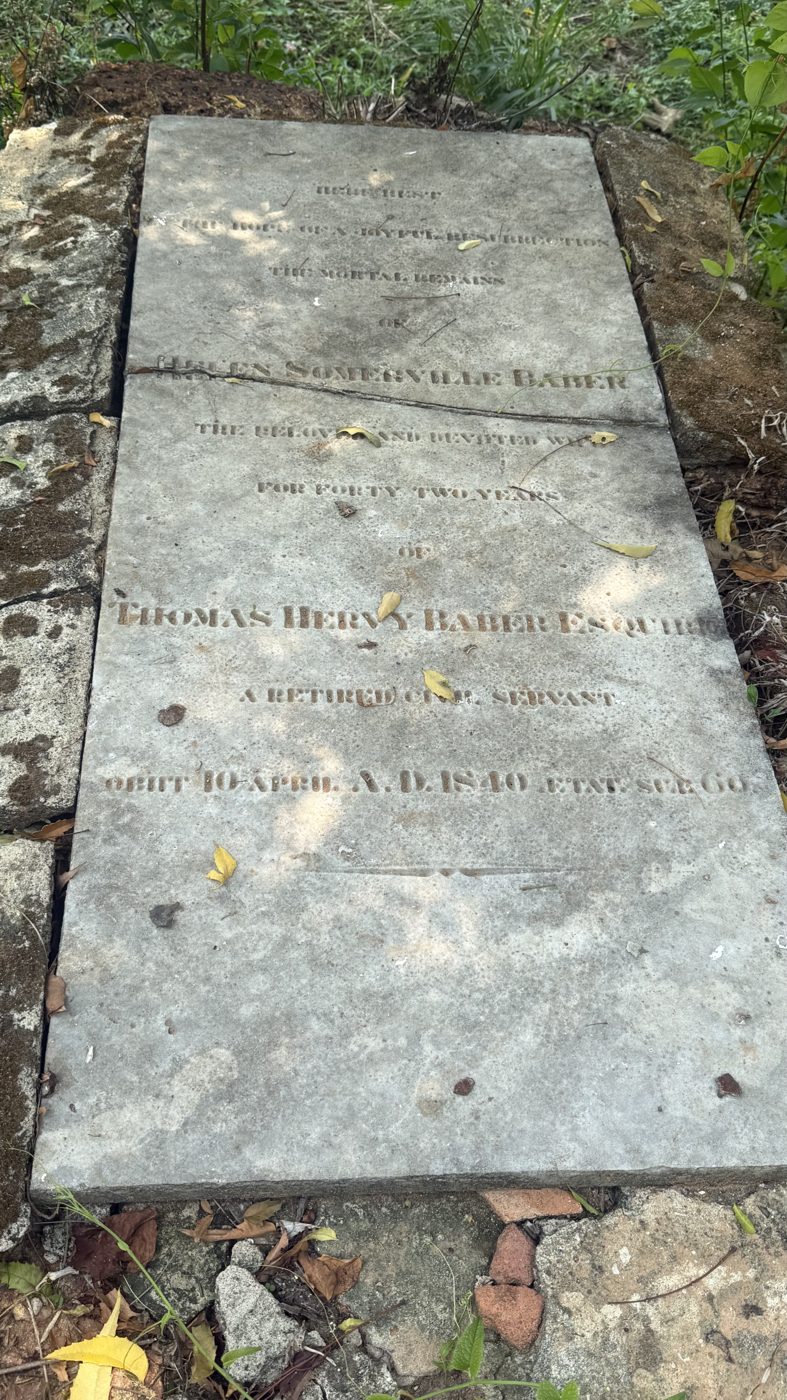
Read that name again. Thomas Hervey Baber.
If that name doesn’t ring a bell, here’s the connection: Baber was the East India Company Sub-Collector who hunted down Pazhassi Raja — Kerala Varma — in the Wynad jungles and killed him on 30 November 1805 at Mavila Thodu. The Pazhassi Raja. The Lion of Kerala. The man whose statue stands in every government building in north Kerala. The man who has at least three Mohanlal films, multiple textbooks, and a thousand school plays dedicated to him.
The man who killed Pazhassi Raja was Thomas Hervey Baber.
And here, in this overgrown cemetery in Thalassery, is the grave of his wife.
Helen was married to Baber for 42 years. Do the maths: 42 years before 1840 means they got married around 1798 — the very year Baber arrived in India as a young EIC writer. So Helen was with him through the entire Pazhassi war (1793–1805). She lived through the Kurichiya rebellion of 1812. She watched her husband’s career as the EIC’s hatchet man in Malabar. And she eventually died here, aged 60, while Baber himself had already retired to England, where he died three years later in 1843.
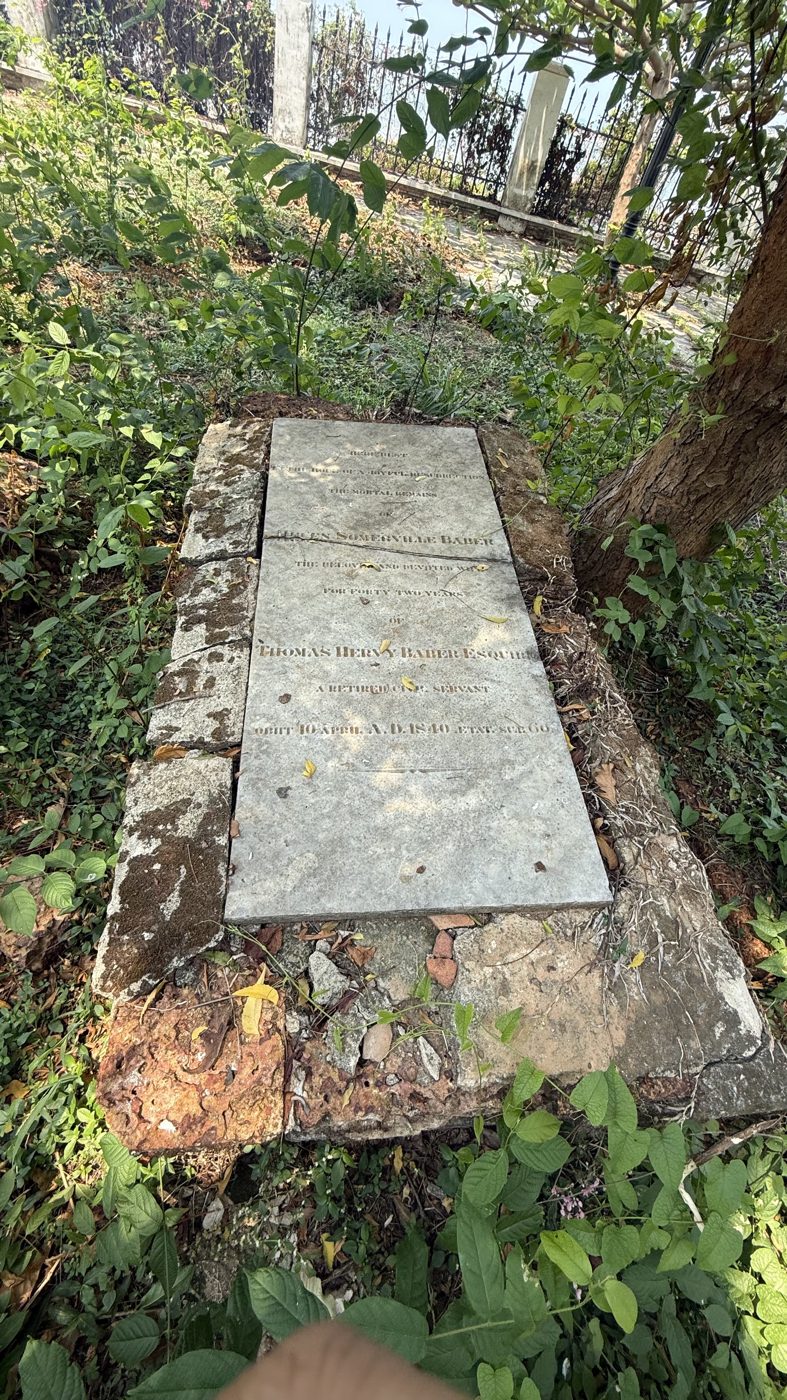
Here is what I find genuinely strange: in a state where Pazhassi Raja is treated as a near-mythical hero, where every politician will quote him at the drop of a hat, where his memorial at Mananthavady is a state monument — the grave of his killer’s wife is sitting unprotected, unmarked by any sign, slowly being eaten by termites and weeds about a kilometer from a major district town.
Nobody has vandalised it. Nobody has put up a board explaining who she was. Nobody seems to know.
That tells you something about how disconnected most of us are from the actual physical evidence of our own history.
3. The Englishman Kerala still owes something to
Not all the British buried here were villains. Some were genuinely complicated. One was, by most accounts, a decent man.
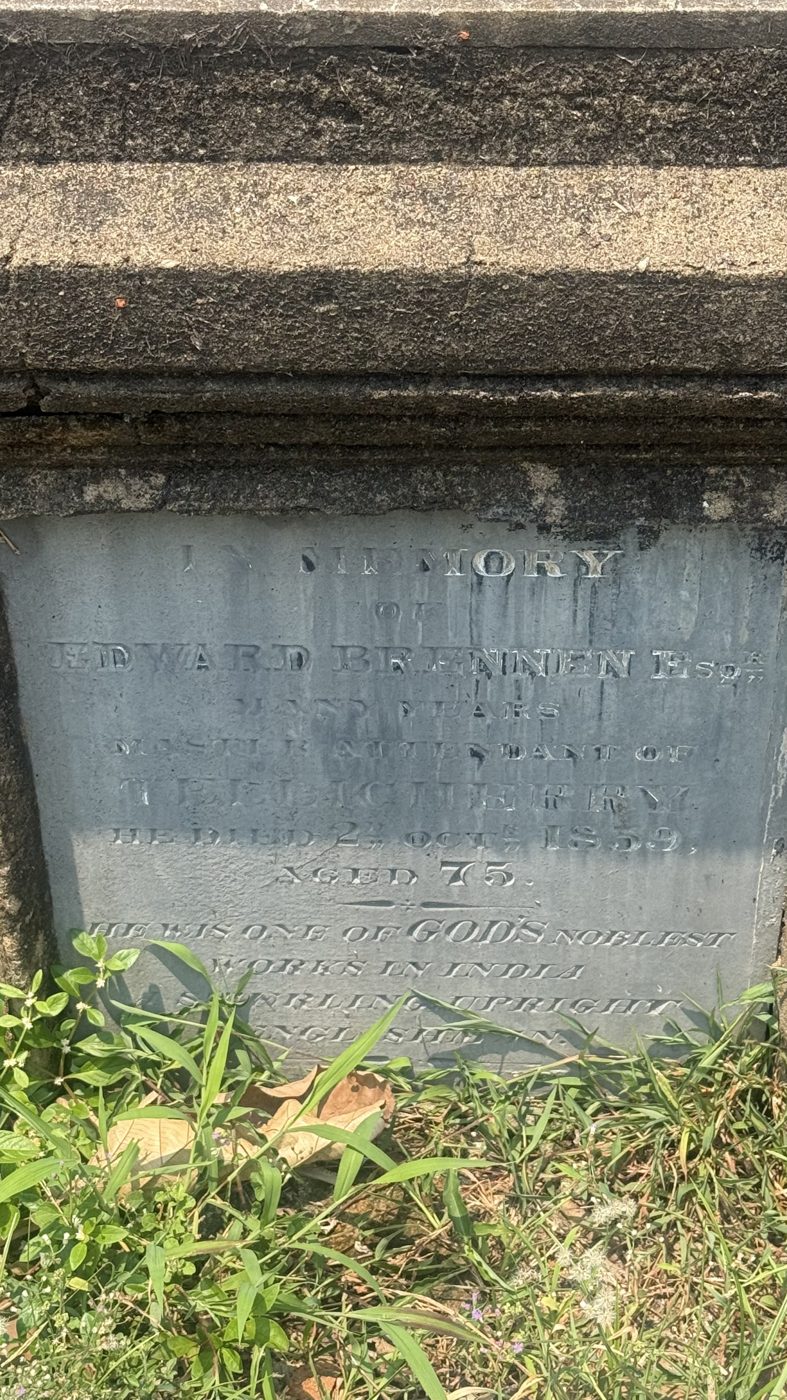
That’s Edward Brennen. The man whose name is on Government Brennen College, Thalassery — one of the oldest colleges in Kerala, established in 1862. Brennen put up the money. He was the harbour master at Tellicherry port for 49 years, from roughly 1810 to 1859. He saw Tellicherry transition from an East India Company pepper port to a Crown port after 1858. Saw the entire arc.
The story they tell about Brennen is that he was a shipwreck survivor. Washed up on the Malabar coast, stayed, made his fortune through the port, and then before he died, donated his savings to set up a free school for the local people. The school grew into Brennen College, which has been producing Malayali graduates for over 160 years.
You’ll notice the inscription says “Brennen” with two e’s. The Kerala Tourism information board uses “Brennan” with an A. The college sticks with the original “Brennen”. The carved stone wins this argument by 165 years and counting.
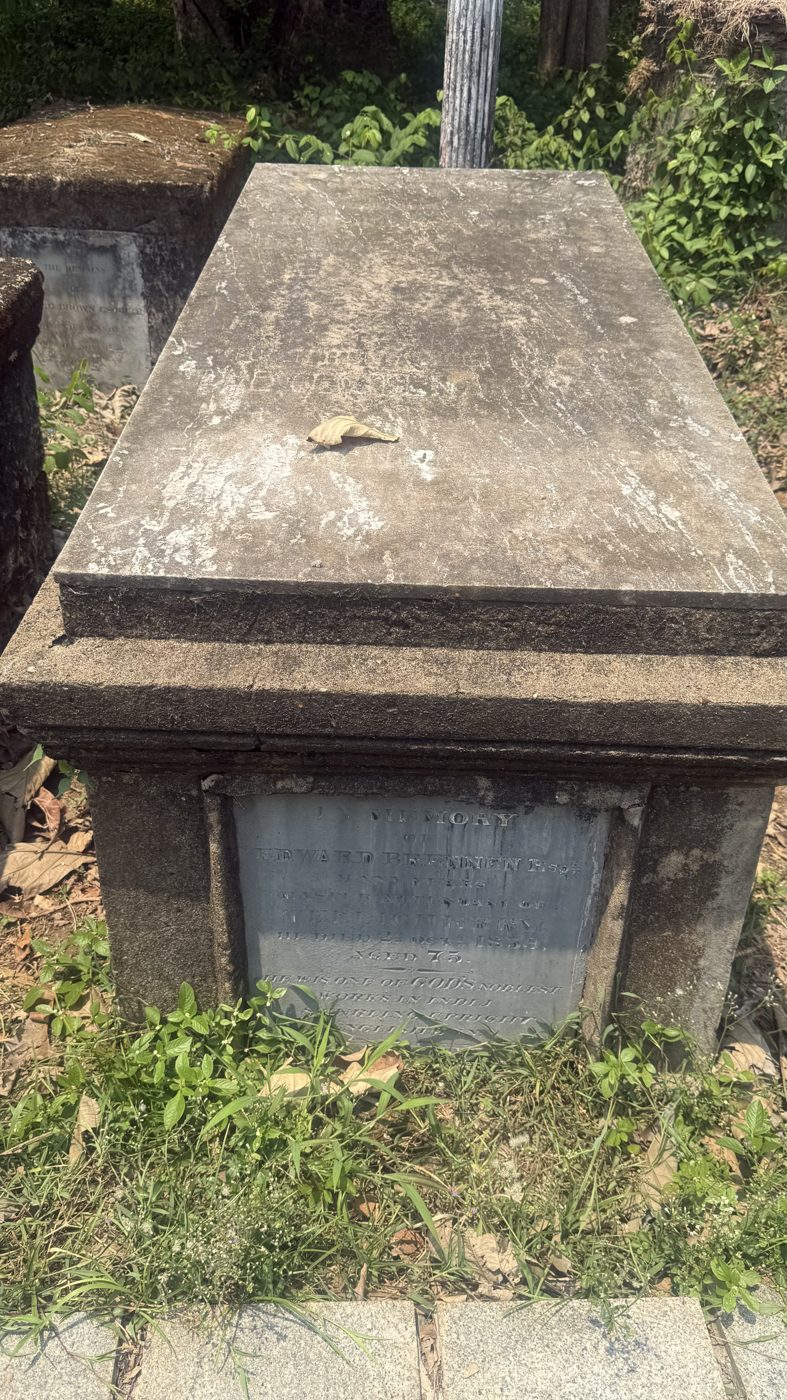
Was Brennen really “one of God’s noblest works”? Probably not. He was an EIC employee for half a century, profiting from the same colonial system that the Browns and the Babers profited from. But he gave back. And the institution he founded has educated tens of thousands of Malayalis since 1862. By the standards of the British in 19th century India, that’s an unusually positive legacy.
4. The Indo-Portuguese Christian who switched churches
One of the most striking monuments in the cemetery is a tall pyramidal/obelisk structure made of laterite blocks. Local stone, European form. Inside the niche, a slate plaque with elaborate scrollwork.
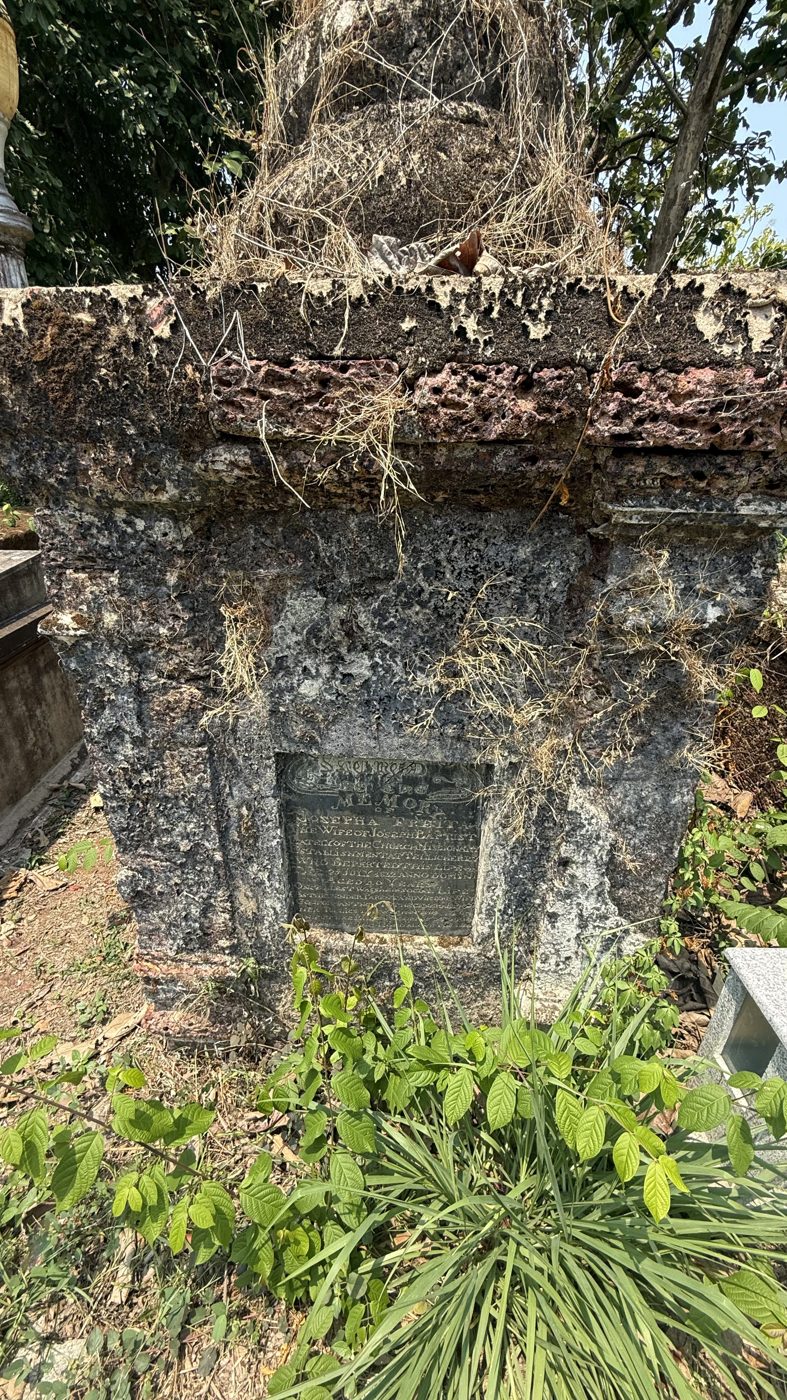
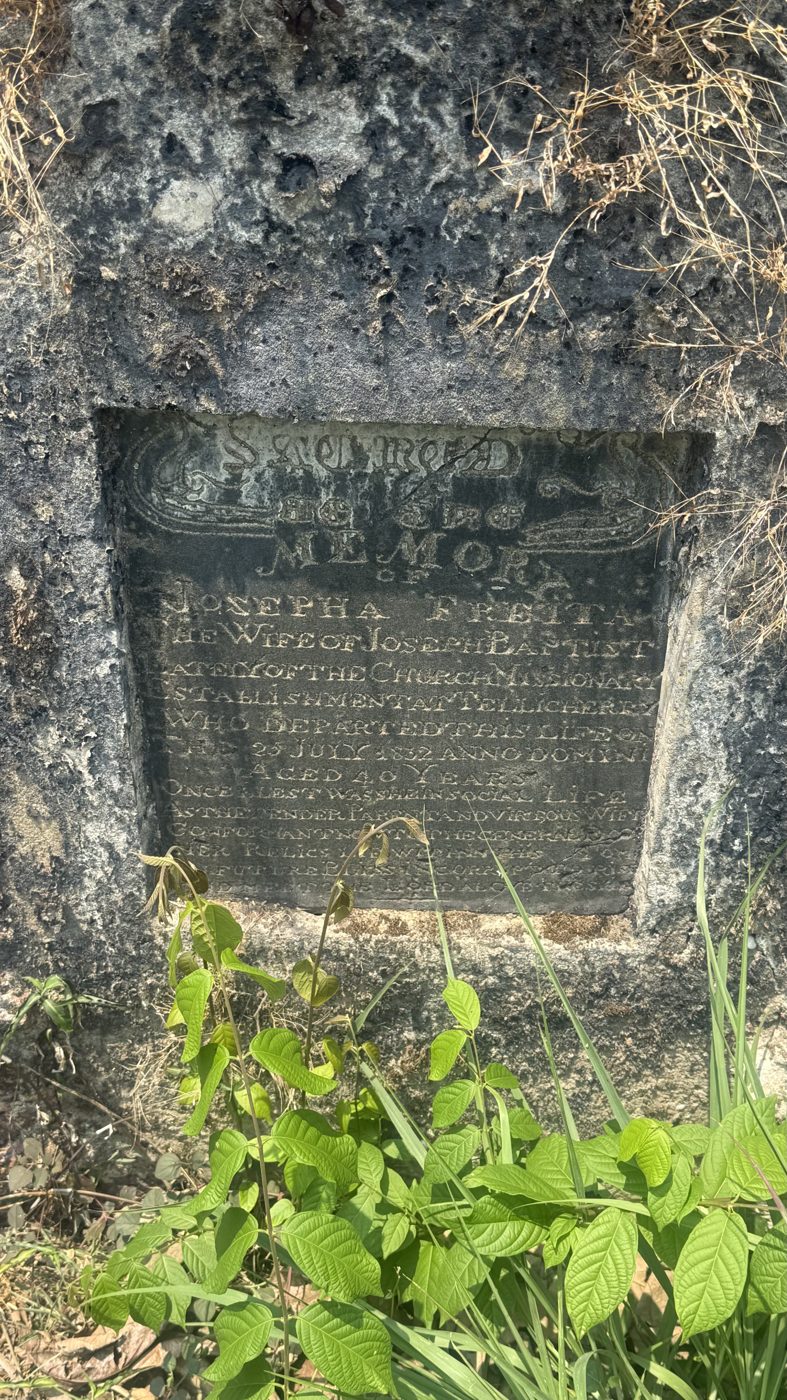
Read those names again: Josepha Freitas. Joseph Baptista. Those are Portuguese surnames. So what are they doing in an Anglican cemetery?
The answer is the Church Missionary Society. The CMS was the evangelical Anglican mission that set up shop in Tellicherry around 1816–1817. They actively recruited from existing Christian populations on the Malabar coast — including Indo-Portuguese Catholics from Goa, Mangalore and Cochin — and absorbed them into the Anglican fold.
So Josepha and Joseph were almost certainly Indo-Portuguese Christians, descendants of the Portuguese who had been on this coast since the 1500s, who got converted (or recruited, or moved) into Anglican mission work in the early 1800s. Their tomb is Portuguese in name, Egyptian Revival in form, made of Malabar laterite, holding an Anglican corpse. That’s about as layered as Indian colonial history gets.
5. The dead babies
This is the part that’s easy to miss but hard to forget once you notice.
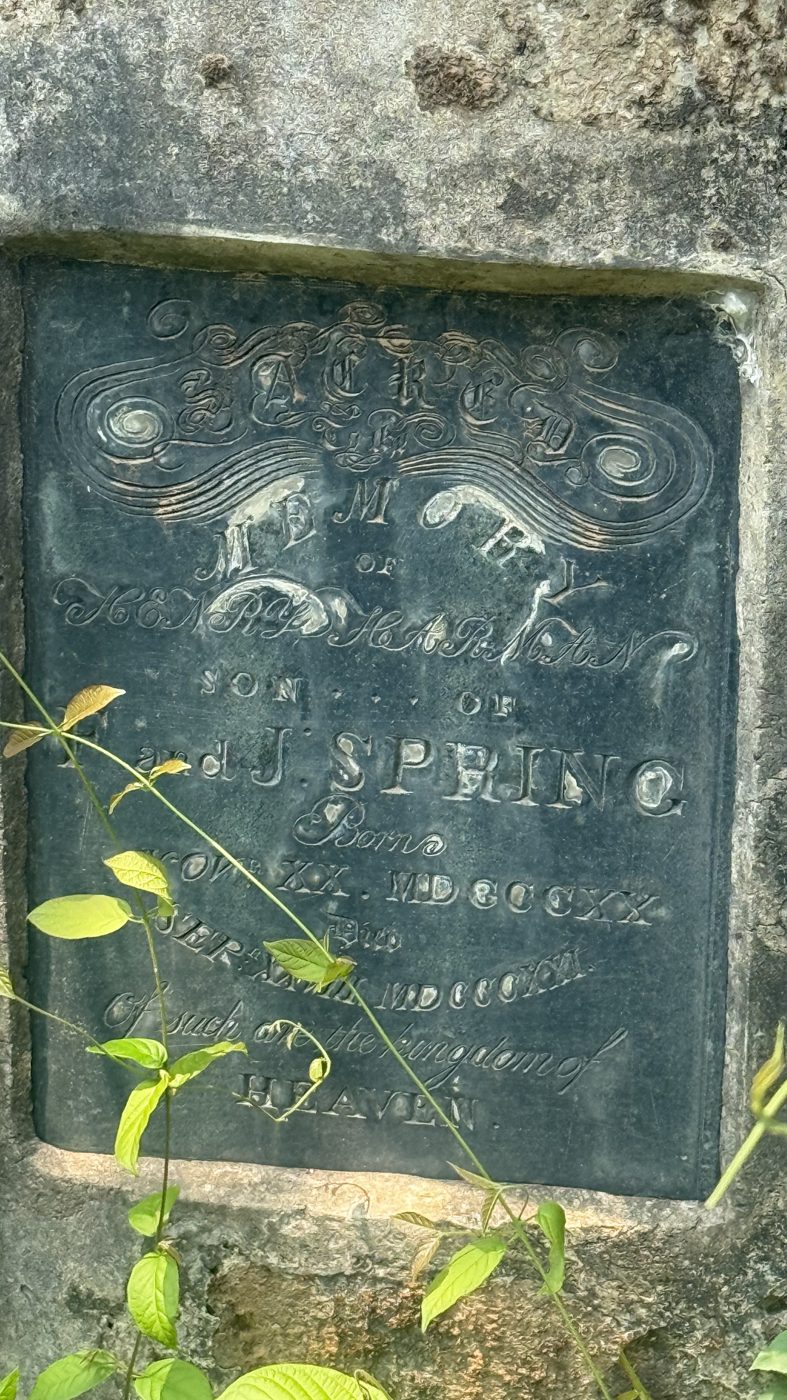
The cemetery has multiple infant graves. One belongs to Henry Harman Spring, who was born in November 1820 and died in February 1822. Fifteen months old. The carving above his name has elaborate scrollwork that must have cost his parents a small fortune. The closing line: “Of such is the kingdom of HEAVEN.”
This is the single most underrated reality of colonial India. European child mortality on the Malabar coast was catastrophic. Malaria, cholera, dysentery, typhoid — these wiped out British infants routinely. Most British families who came out to Tellicherry buried at least one child here. Many buried more.
The empire we read about in textbooks was, on the ground, a slow grinding loss for everyone — including the people running it. The romance of the Raj is mostly a later invention.
6. The widow who died at sea, in sight of land
Here is the saddest story in the cemetery.
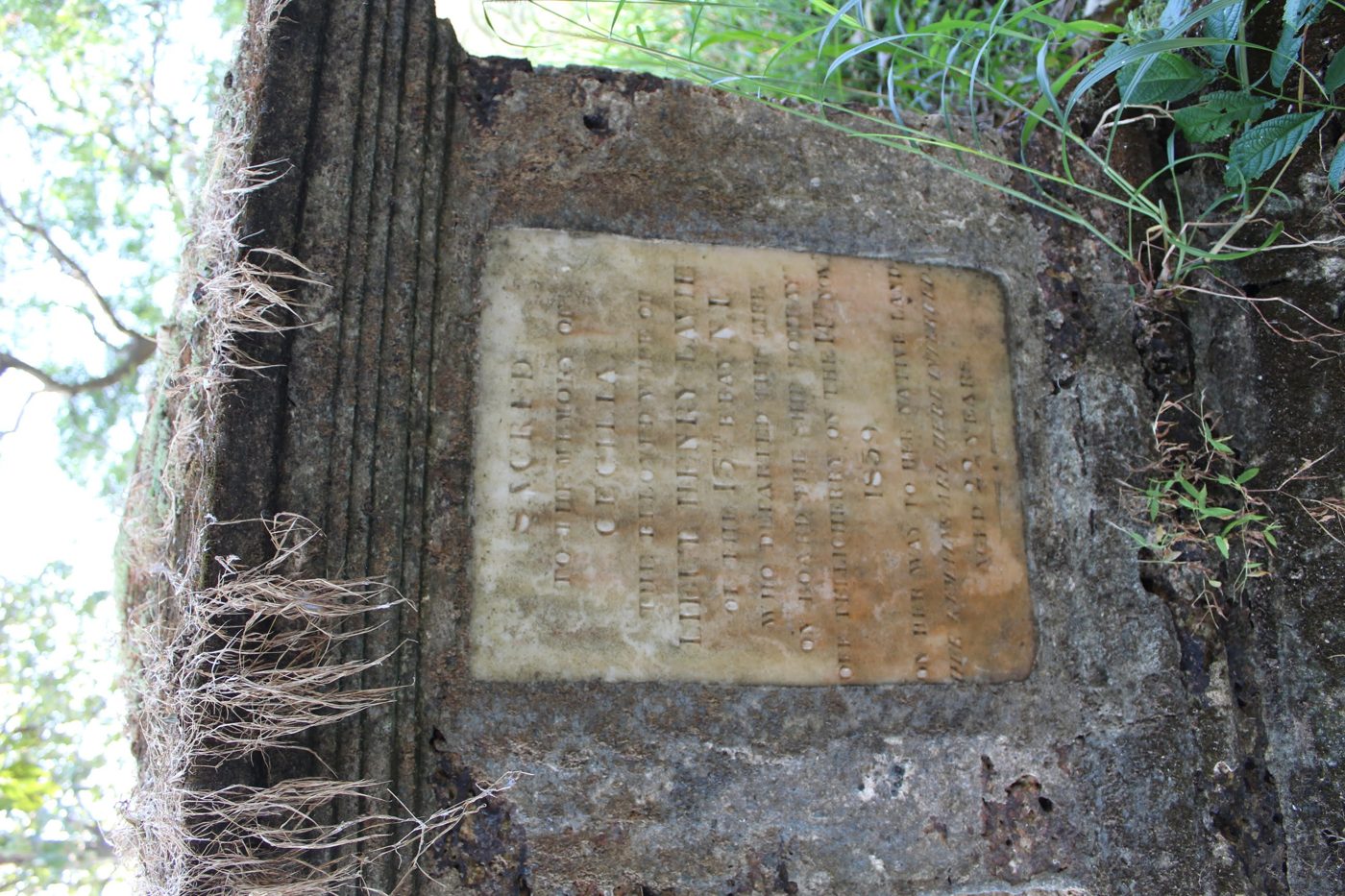
Cecilia was the wife of a Lieutenant of the 15th Bengal Native Infantry. The year is 1859 — two years after the 1857 Mutiny. Many British families were sending their women home to Britain post-Mutiny, traumatised by what had happened in the north. Cecilia was on a ship called the Bombay, on her way home, when she died at sea — in the roads of Tellicherry, meaning the sheltered anchorage just off the coast. She died in sight of land, with the shore visible from her cabin window. Her body was brought ashore and buried here.
She was probably in her late twenties.
What this cemetery actually is
If you sit with all of this for a while, the picture that emerges is striking. In about fifty graves, in this small overgrown patch of ground in Thalassery, you have:
- The founder of plantation capitalism in Kerala
- The wife of the man who killed Pazhassi Raja
- The founder of one of Kerala’s oldest colleges
- Indo-Portuguese Catholics absorbed into Anglican mission work
- Bengal Army widows who died at sea during the Mutiny aftermath
- Young EIC merchant captains who didn’t survive the spice trade
- A grim catalogue of dead children
This is one of the most historically dense British-Indian cemeteries in South India. More important than its current overgrown state suggests. More important, frankly, than the church next to it.
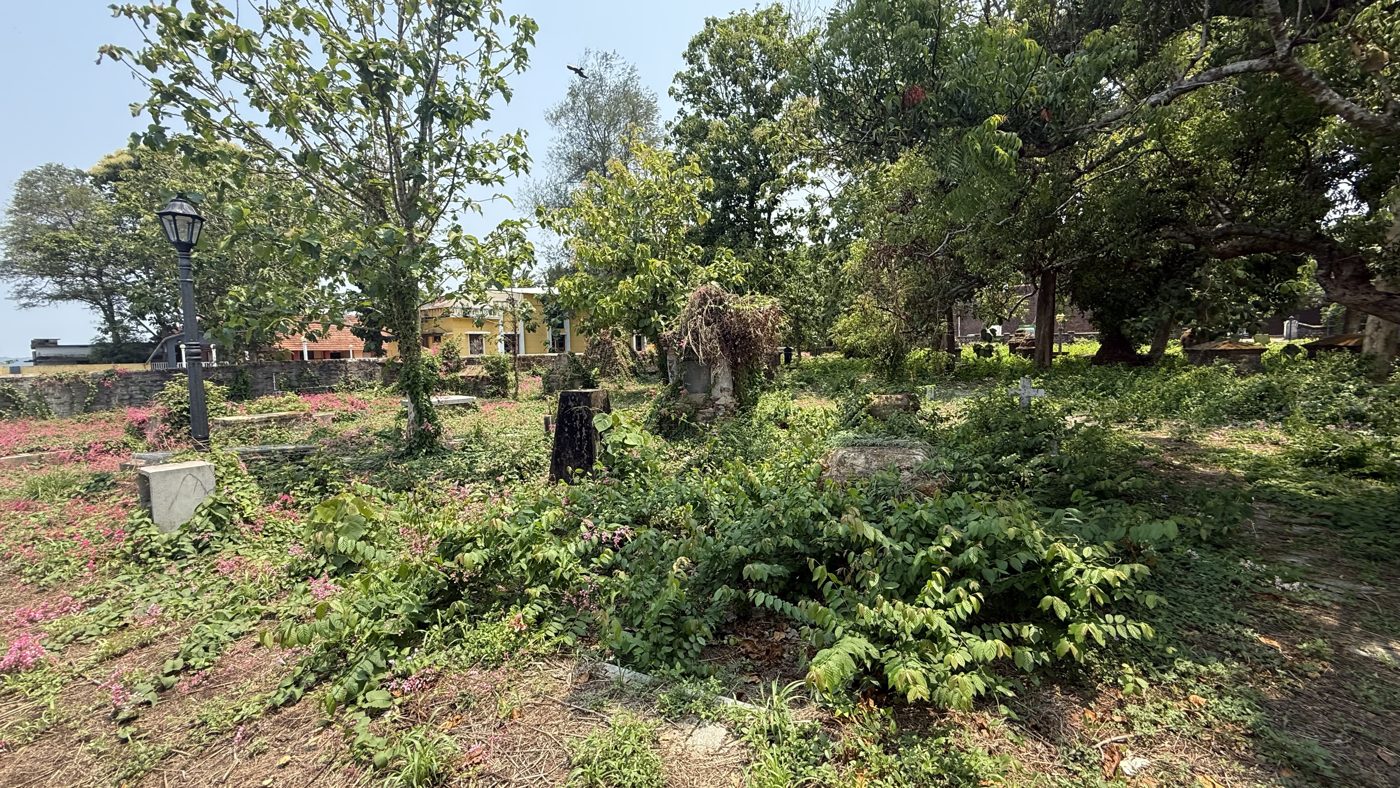
An architectural footnote that deserves a study of its own
Look at the tomb materials. Several of these monuments are built out of laterite blocks — the local Malabar building stone, soft when freshly cut, hardening on exposure to air. Cut into rectangular blocks, stacked into pyramids, obelisks, and domed cylinders.
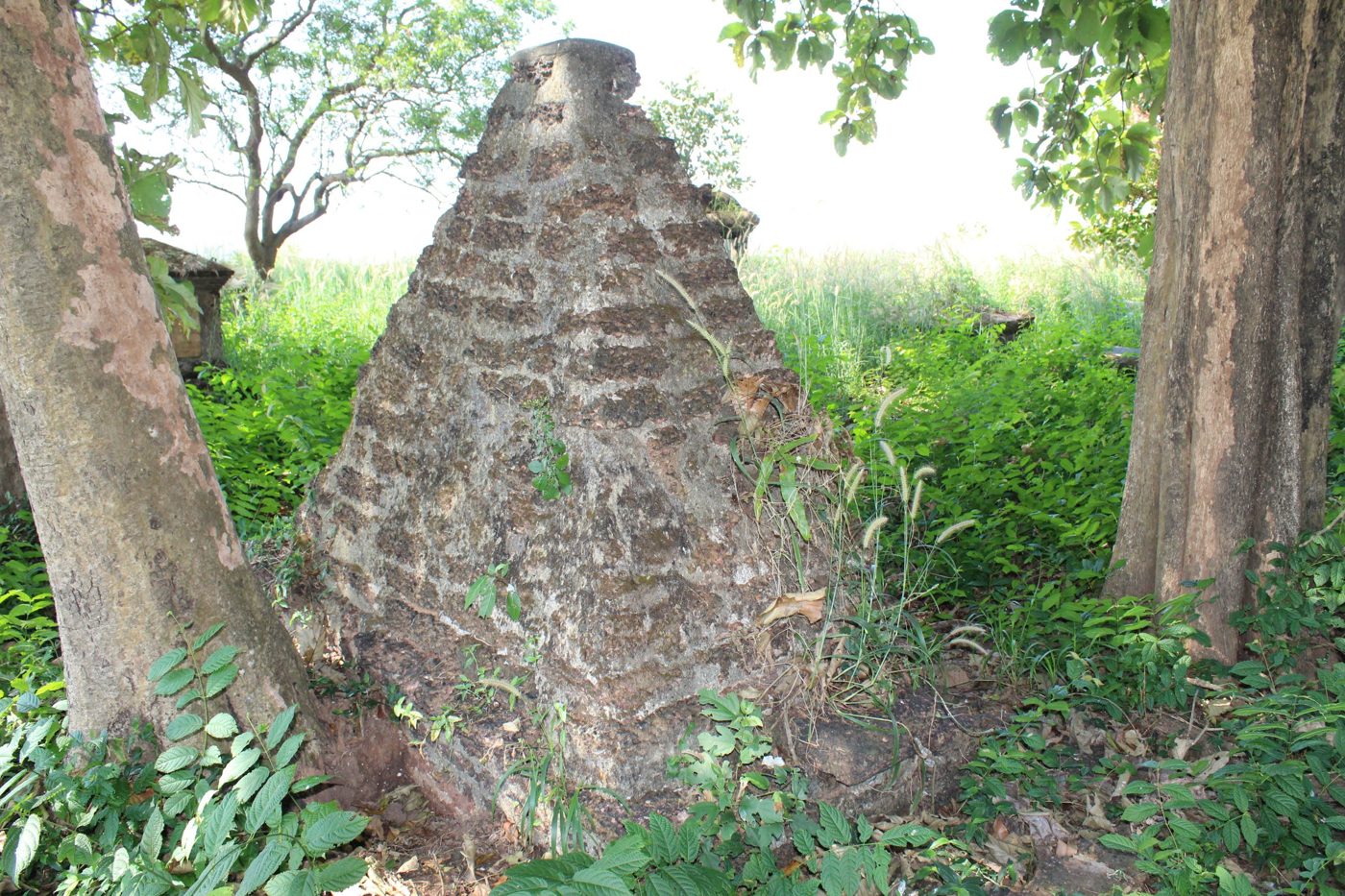
The pyramidal and obelisk forms come from Egyptian Revival, a style fashionable in Britain between roughly 1820 and 1840. Translated into Malabar laterite by local masons, you get something that exists almost nowhere else. You won’t find this combination in the Park Street cemeteries of Calcutta or the Sewri cemetery in Bombay — they used imported European stone. Tellicherry used what was under its feet.
This is colonial Malabar’s own architectural dialect. It deserves a separate study by itself.
Why none of this is on a tourist circuit
The Government of Kerala restored the church in 2009. That was a good decision. But the cemetery itself — which is where the real history is — has been left to rot. There is no signboard. No interpretation. No caretaker. The Murdoch Brown stone is half-illegible. The Helen Baber slab is being eaten by lichen. In another twenty years, several of these inscriptions will be gone for good.
For a state that has multiple departments of archaeology, tourism, and culture — and a serious public interest in our own colonial history — this is genuinely shameful.
The Helen Baber connection alone should make this a protected site. Pazhassi Raja’s killer’s wife is buried here. The Pazhassi memorial in Mananthavady draws thousands of visitors a year. This grave, which is the other half of the same story, has zero footfall and zero protection.
Even basic intervention would help. Clear the undergrowth. Put up three signboards explaining who Brown, Baber and Brennen were. Add this to the existing Thalassery Heritage Walk that already covers the fort, the Overbury’s Folly, the old courthouse, the gunny mart. It would take very little.
If you go
St. John’s Anglican Church is in Palayoor / Palissery, behind Thalassery Fort, walking distance from the bus stand. Open access — no ticket. Best visited in the dry months (December to April) because the monsoon turns the cemetery into a snake habitat. Service still happens on alternate Sundays from 9.00 am to 10.30 am.
Take a torch. Some of the inscriptions are in low-relief slate and you need raking light to read them. Don’t try to clean the stones — leave them as they are. And if you can read Latin numerals, you’ll find a lot more dates than the casual visitor notices.
Most of all: read the stones. Slowly. There’s two centuries of history in there, and almost nobody is paying attention.
മലയാളത്തിൽ
തലശ്ശേരി കോട്ടയ്ക്ക് പിന്നിൽ, പാലിശ്ശേരിയിൽ, 1869-ൽ പണിത ഒരു ചെറിയ ആംഗ്ലിക്കൻ പള്ളി ഉണ്ട് — സെന്റ് ജോൺസ്. പള്ളിയല്ല, അതിന് പിന്നിലെ സിമിത്തേരിയാണ് യഥാർത്ഥ കഥ.
ആ കാട് മൂടിക്കിടക്കുന്ന കല്ലറകളിൽ:
- മർഡോക് ബ്രൗൺ (1828) — അഞ്ചരക്കണ്ടിയിൽ 1797-ൽ ആദ്യത്തെ വാണിജ്യ പ്ലാന്റേഷൻ തുടങ്ങിയ സ്കോട്ടിഷ്കാരൻ. കേരളത്തിന്റെയും വയനാടിന്റെയും ഇടുക്കിയുടെയും മുഴുവൻ പ്ലാന്റേഷൻ സമ്പദ്വ്യവസ്ഥയും ഇയാളുടെ മാതൃകയിലാണ് വളർന്നത്.
- ഹെലൻ സോമർവിൽ ബേബർ (1840) — തോമസ് ഹെർവി ബേബറുടെ ഭാര്യ. പഴശ്ശിരാജയെ വെടിവെച്ചു കൊന്ന അതേ ബേബർ. 42 വർഷം ഭാര്യയായിരുന്നു.
- എഡ്വേർഡ് ബ്രെണ്ണൻ (1859) — ബ്രെണ്ണൻ കോളേജിന്റെ സ്ഥാപകൻ. 49 വർഷം തലശ്ശേരി തുറമുഖത്തിന്റെ മാസ്റ്റർ അറ്റൻഡന്റ്. കപ്പൽ തകർന്ന് രക്ഷപ്പെട്ട ശേഷം മലബാറിൽ സ്ഥിരതാമസമാക്കി, സമ്പാദ്യം മുഴുവൻ സ്കൂൾ തുടങ്ങാൻ വിട്ടു കൊടുത്തു.
- ജോസെഫ ഫ്രെയ്റ്റാസ് (1832) — CMS മിഷനറി ജോലിയിൽ ഉണ്ടായിരുന്ന ഇൻഡോ-പോർച്ചുഗീസ് ക്രിസ്ത്യൻ.
- സിസിലിയ ഡേവി (1859) — ബംഗാൾ ആർമി ലെഫ്റ്റനന്റിന്റെ ഭാര്യ, ബ്രിട്ടനിലേക്ക് മടങ്ങുന്ന വഴി തലശ്ശേരി തുറമുഖത്ത് നങ്കൂരമിട്ടിരുന്ന കപ്പലിൽ വെച്ച് മരിച്ചു.
- ഒരു വയസ്സിന് താഴെ മരിച്ച പല കുഞ്ഞുങ്ങളും — കൊളോണിയൽ മലബാറിലെ കടുത്ത ശിശുമരണനിരക്കിന്റെ തെളിവ്.
2009-ൽ കേരള ടൂറിസം പള്ളി നന്നാക്കി. പക്ഷേ സിമിത്തേരി ഇപ്പോഴും കാടു പിടിച്ചു കിടക്കുന്നു. ലിഖിതങ്ങൾ പലതും വായിക്കാൻ പറ്റാത്ത അവസ്ഥയിൽ. പഴശ്ശിരാജയുടെ കൊലയാളിയുടെ ഭാര്യയുടെ കല്ലറയ്ക്ക് പോലും ഒരു ബോർഡില്ല. ഇത് ഒരു സംരക്ഷിത സ്മാരകമാക്കേണ്ട സമയം എന്നോ കഴിഞ്ഞു.
Related reading on KeralaClick
- The East India Company: The First Corporate Empire And Its Long Shadow
- Kerala State Formation: The Real History Through a 1955 Indian Express Lens
- More Kerala travel stories
എല്ലാ ഫോട്ടോകളും ഇൻ-സൈറ്റ് സന്ദർശനത്തിൽ എടുത്തത്. കൂടുതൽ കേരള ചരിത്രവും യാത്രാ കുറിപ്പുകളും KeralaClick blog-ൽ.